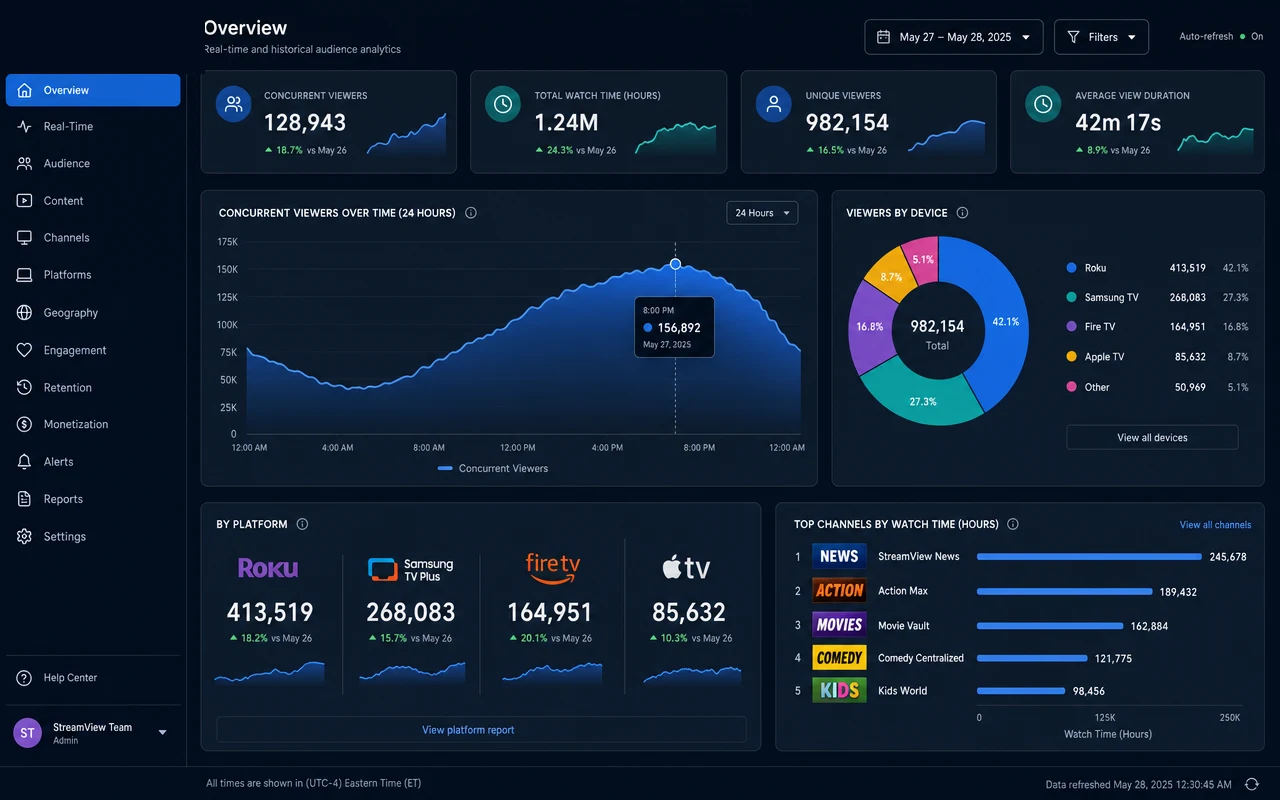
The standard way to measure streaming is a JavaScript snippet or a player plugin that phones home. It undercounts by design. A plugin cannot see a plain HLS URL opened in VLC, a feed playing inside a distributor’s app, or any player you never shipped code to. Script blockers take another bite, and each new platform means another integration to build and keep working.
Measuring at the point of delivery turns that around. Anything that plays the stream had to ask us for the video first, so everything that plays gets counted, whatever the player was. One measurement point covers the web player, TV apps, embeds, and raw stream links, and the numbers cannot be blocked on the viewer’s device because nothing runs on the viewer’s device.
What this means for privacy
Measuring this way needs no cookies and builds no profiles. Sessions are counted with rotating identifiers, geography stays coarse, and the result is audience measurement rather than surveillance. You learn how many people in a given city watched the evening show, and nothing about who they were.