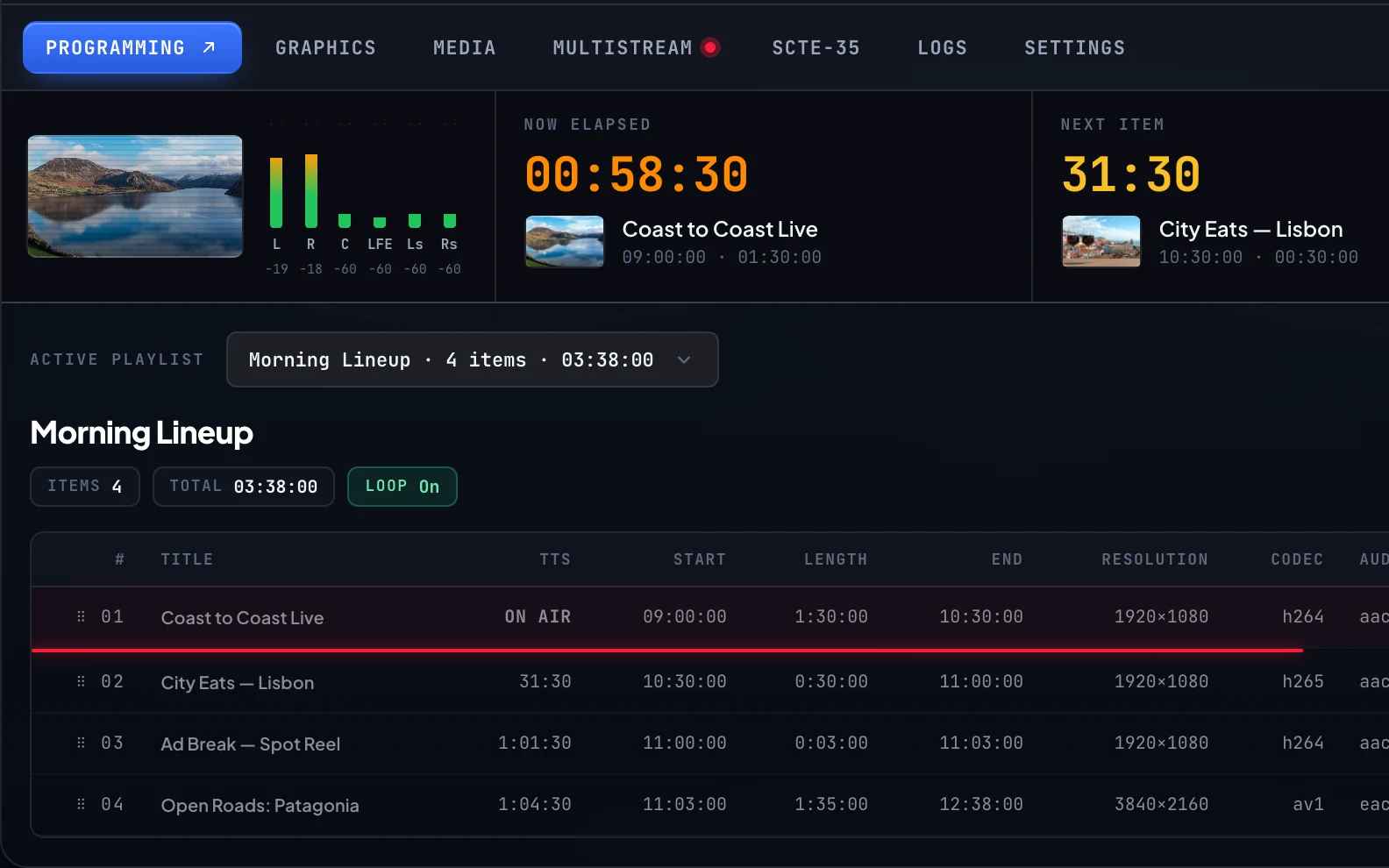
A traditional playout chain is a stack of purchases: an automation system, a video server, a character generator, an encoder, and someone qualified to keep them talking to each other. It works, which is why broadcasters ran it for decades, and it is why a new channel used to be a six-figure decision before a single show aired.
Cloud playout collapses that stack into a service. The same four jobs run per channel on infrastructure you never touch, the console is a browser tab, and a second channel takes minutes instead of a second rack. Updates land without a maintenance window on your side, and the cost sits on the cloud playout pricing page instead of in a capex request. Compare us against Muvi and Amagi, move a channel off satellite, or start with the guide to what cloud playout is.
Built to stay on air
The engine assumes something will go wrong at 3am. Schedule gaps auto-fill from the library, a bad file skips to the next item, and a dropped live input falls back to the schedule, rejoining when it recovers. As-run logs record what actually aired, so you can check what happened last night instead of reconstructing it. The grid all of this runs from has its own page, TV scheduling software, and a channel that also has to feed a cable headend is covered under local and cable channels.
Wired for the rest of the platform
The SCTE-35 cues playout carries are the same ones server-side ad insertion fills, the schedule it airs is the same one published as your channel’s programme guide, and every stream it hands to the delivery network is counted in your channel analytics.