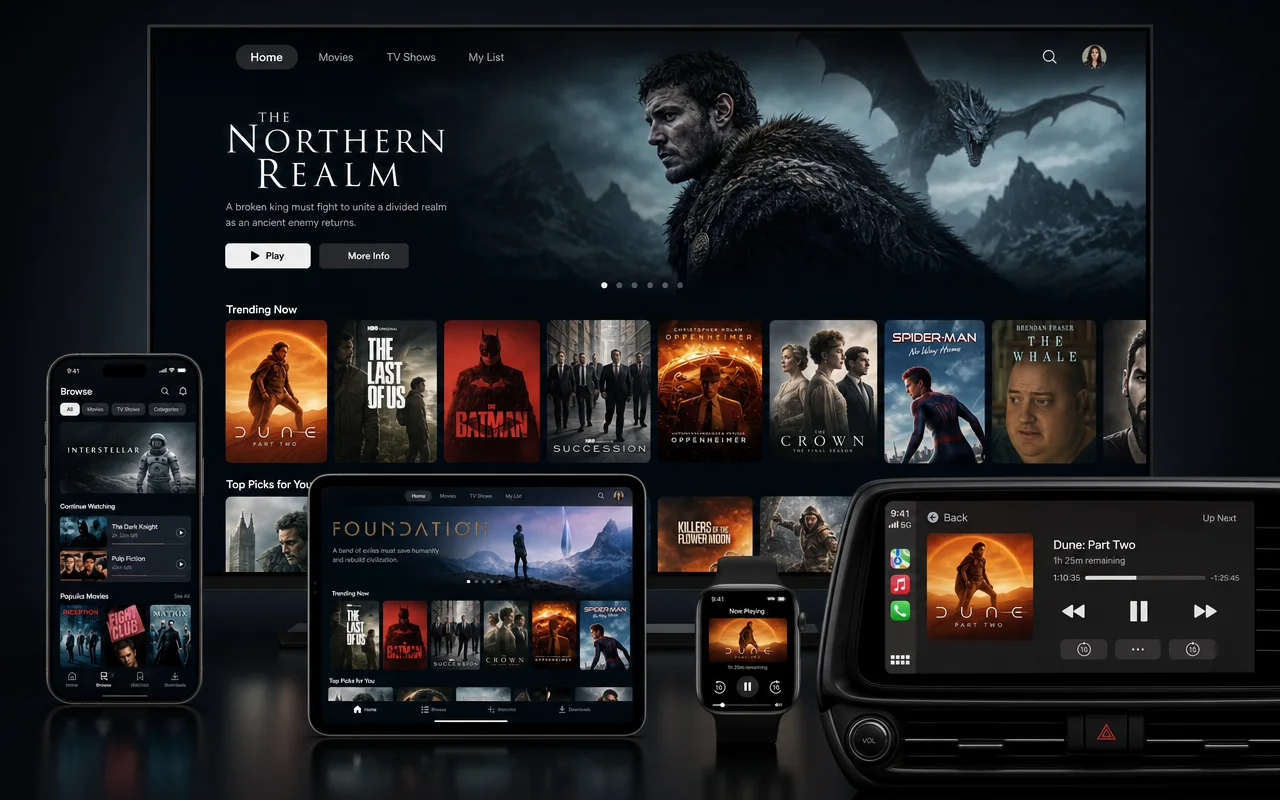
They are different businesses. A streaming service is on demand and direct: viewers pay you, or watch ads inside your app, and the library is the product. A FAST or linear channel is scheduled and lean-back: free to watch, funded by ad breaks, built for reach. The economics follow. A service earns more per viewer from far fewer viewers; a channel earns less per viewer from many more of them.
The honest answer for most content owners is eventually both. Launch the FAST channel for reach and discovery, run the OTT service for the audience that wants everything on demand, and embed the live channel inside the app so each one feeds the other. The two products share your library, your analytics, and your ad pipeline, so the second launch is much smaller than the first.
The app-store question
The web service is live as soon as you are, on your domain, with casting to the living-room TV built in. Native mobile and TV apps are an add-on, built per platform and published under your own app-store accounts, which means store review timelines apply but the listing, the ratings, and the installs belong to you. Start on web, add the storefronts that earn their keep.
Own the platform, not just the content
Publishing to social platforms rents an audience: the platform owns the relationship, sets the rules, and takes the margin. Your service inverts that. Sign-ups land in your subscriber list, pricing is your decision, and the data exports whenever you ask. Protection scales with the rights involved, from signed URLs on every plan up to studio DRM, territory rules, and forensic watermarking. It is the difference between building a following and building an asset.